The Fossil Bar
Time without Borders" original artwork by Chuck Law
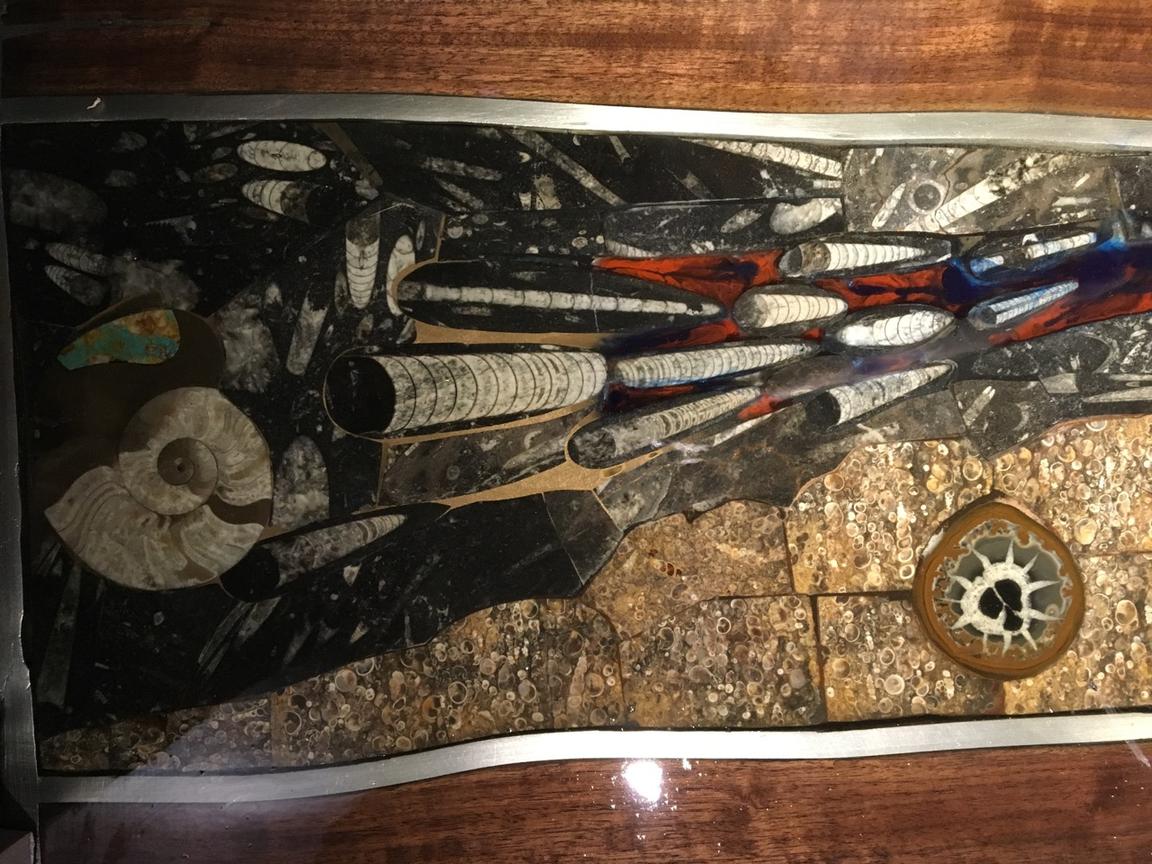
Hand poured pewter, Walnut Slab, Fossils, Gemstones - Turquoise, Malachite, dinosaurs bone, Epoxy resin, 18 months to complete.
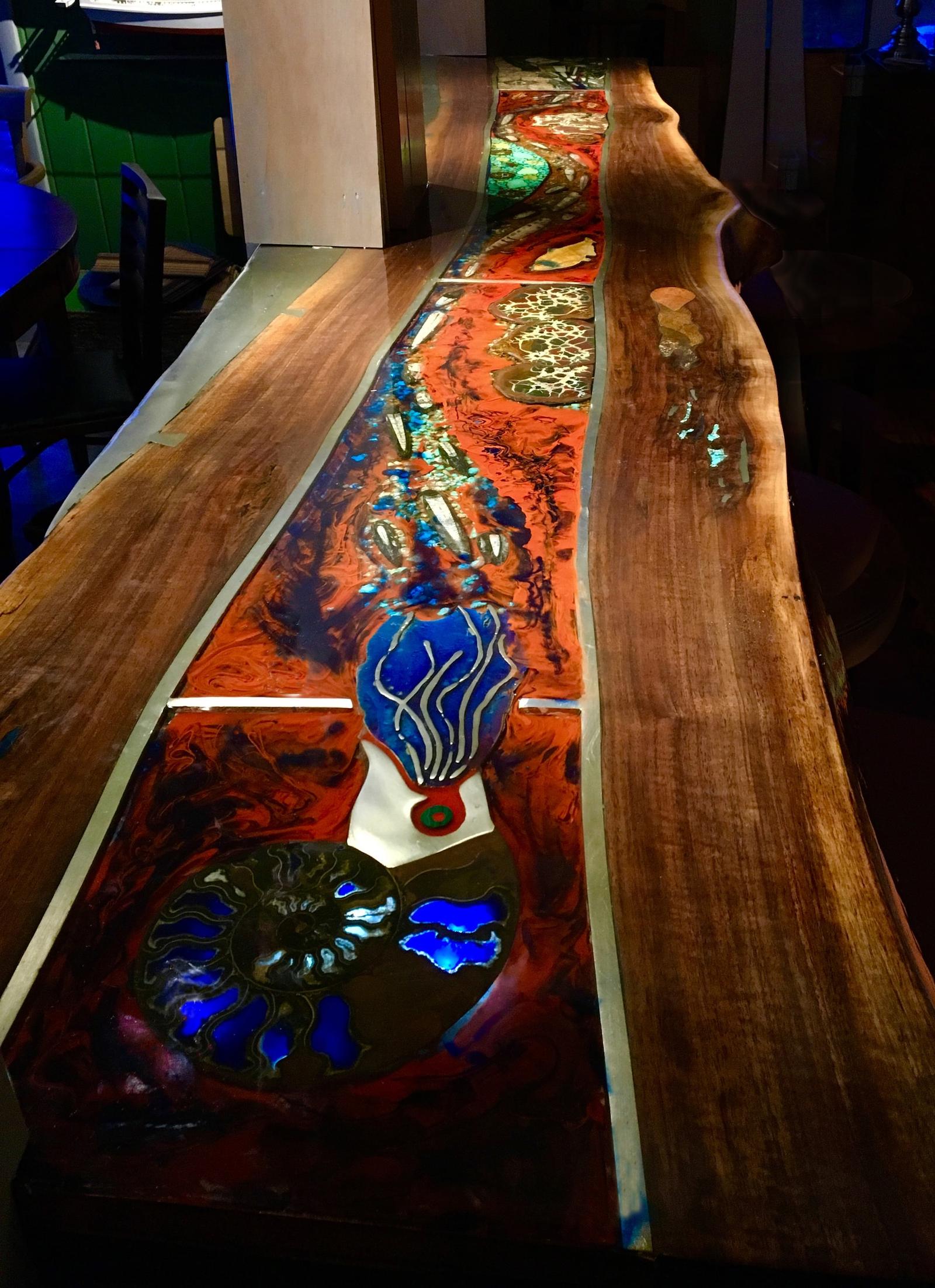
The fossils were purchased from multiple places including Ebay and mineral shows:
Orthoceras (black mollusks, from Morocco, 400M yrs old)
Ammonite (nautilus shape, Morocco, 400M)
Diplomystus ( large fish, Wyoming, 50M yrs)
Knightia (small fish, Wyoming, 50M yrs)
Turritella agate (snails in brown slab, Wyoming 50M yrs),
Septarian Nodules ("dinosaur eggs", 50-70 million yrs old)
One more thing.... the Golden Ratio This is a topic in itself. To simplify, there is a number that has fascinated mathematicians dating back to BC. "1.6180339887..." So What? It turns out that when you analyze proportions in seemingly unrelated things like nautilus shells, bones lengths in humans, ancient buildings, pine cones, human DNA, Milky Way Galaxy, ancient buildings, Shaker furniture, sculptures, and on and on,..... this number keeps appearing! How is this even possible? Also, in 1202 an Italian mathematician Fibonacci, described number sequence sequences where each number is the sum of the two preceding numbers ie. 1, 1, 2, 3, 5, 8, 13, 21, 34, 55, 89, 144, 233, 377. These Fibonacci sequences turned out to play an incredible role in mathematics, computing and even genetics. So what? All of these sequences end up with the numbers having the same ratio.....1.6180339887! What does this have to do with the bar? To provide a natural feeling of harmony despite the wide array of materials, I used Fibonacci sequences for everything that I could. The pewter partitions in the central resin area and the gradually decreasing wavelength of the path of of the school of "swimming" orthoceras are just two examples
There are 3 major sections to the piece:
1. Walnut - Live edge front
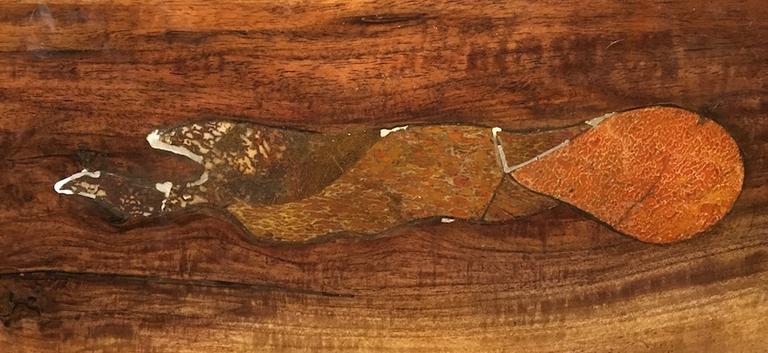
The front edge was left natural to show the beauty and flow of the grain. It has multiple layers of epoxy resin that has been topped with 4 layers of varnish that I modified for increased hardness. A whimsical meteorite made of dinosaur bone was inlayed to fill a large defect in the wood. Wasn't sure about this feature for awhile, but I am now glad I added it. The shape of the table edge was kept natural with only some light sanding.
2. Resin and Fossil the "Big Bang"
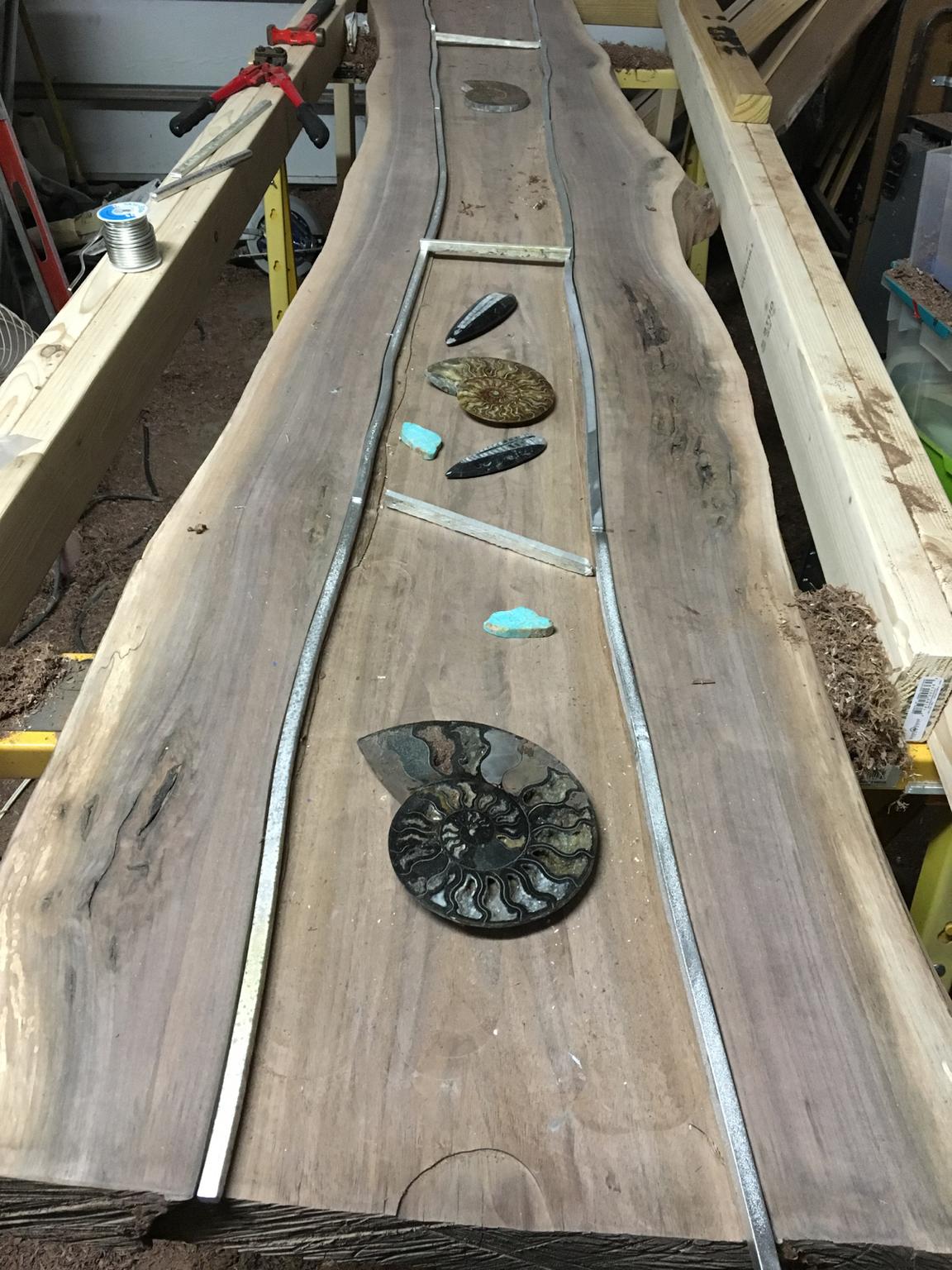
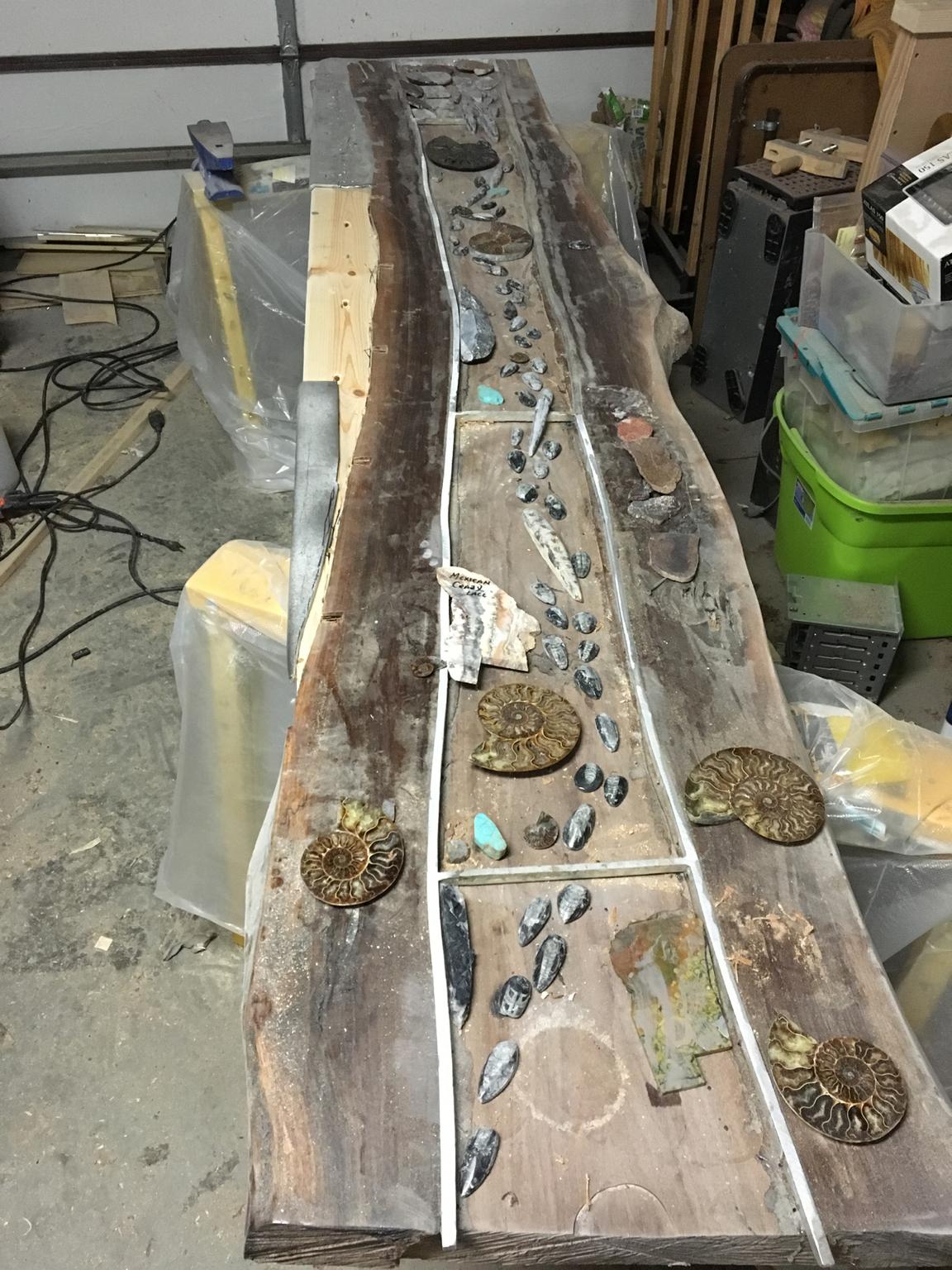
Four sections were created with hand poured pewter rails that were bent to shape then welded together. The lengths of each section, and the diminishing wave length of the fossil stream, are based on a Fibonacci sequence (see above). It is fitting that the Big Bang comes from an ammonite whose shel closely adhere to the golden ratio. Clear epoxy, and epoxy blended with universal colorants, was used to create dynamic patterns and visual depth.
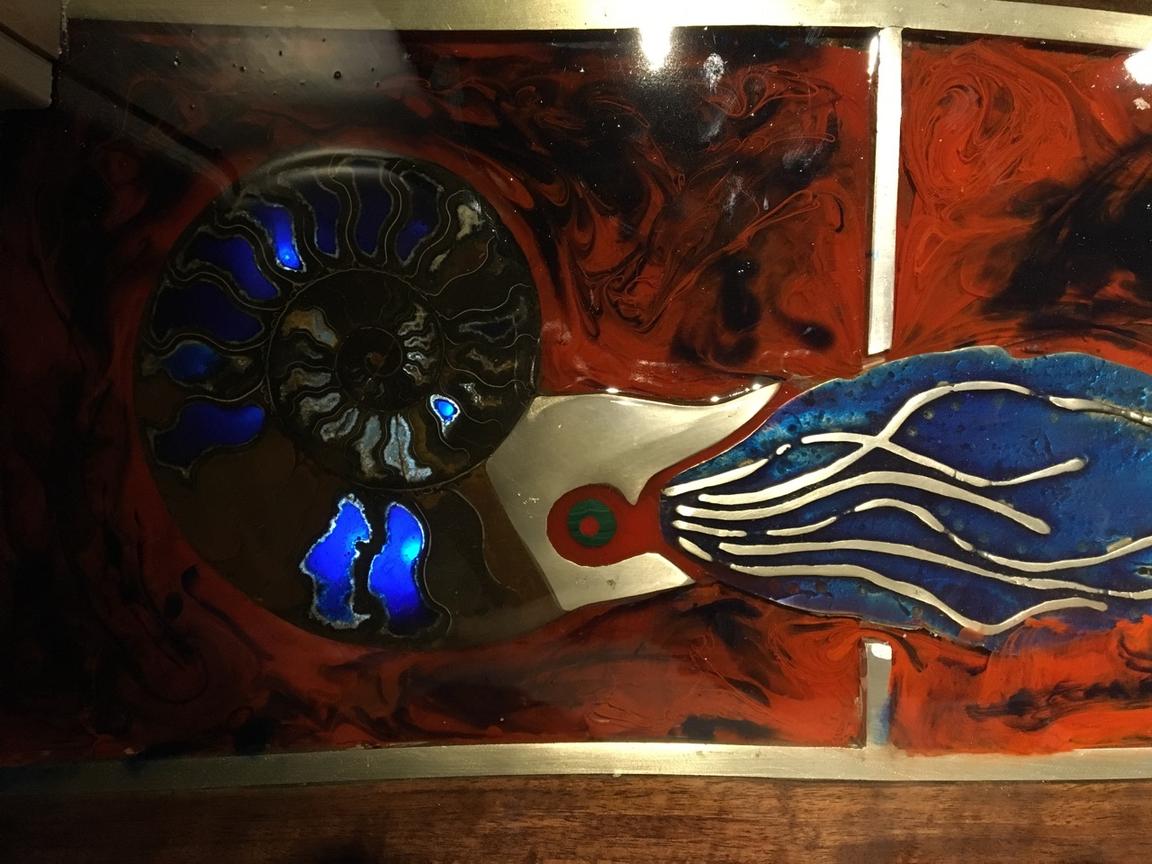
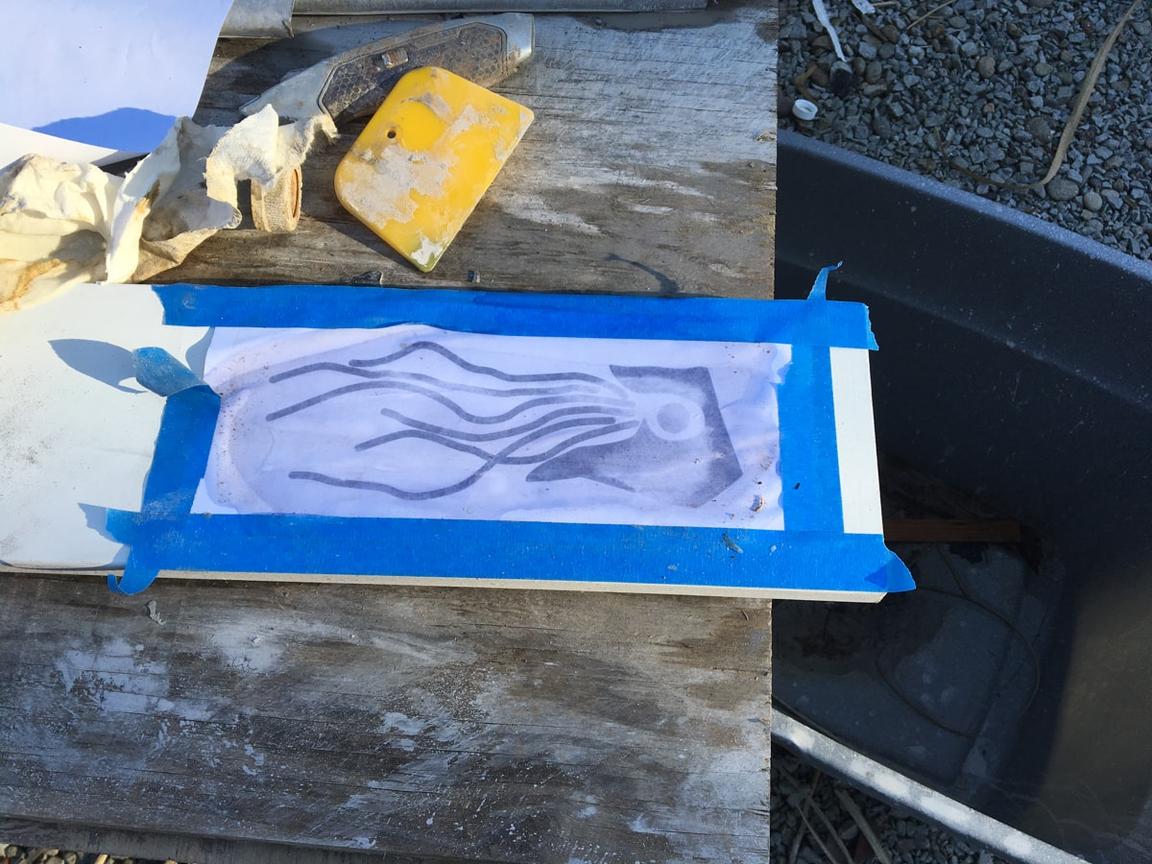
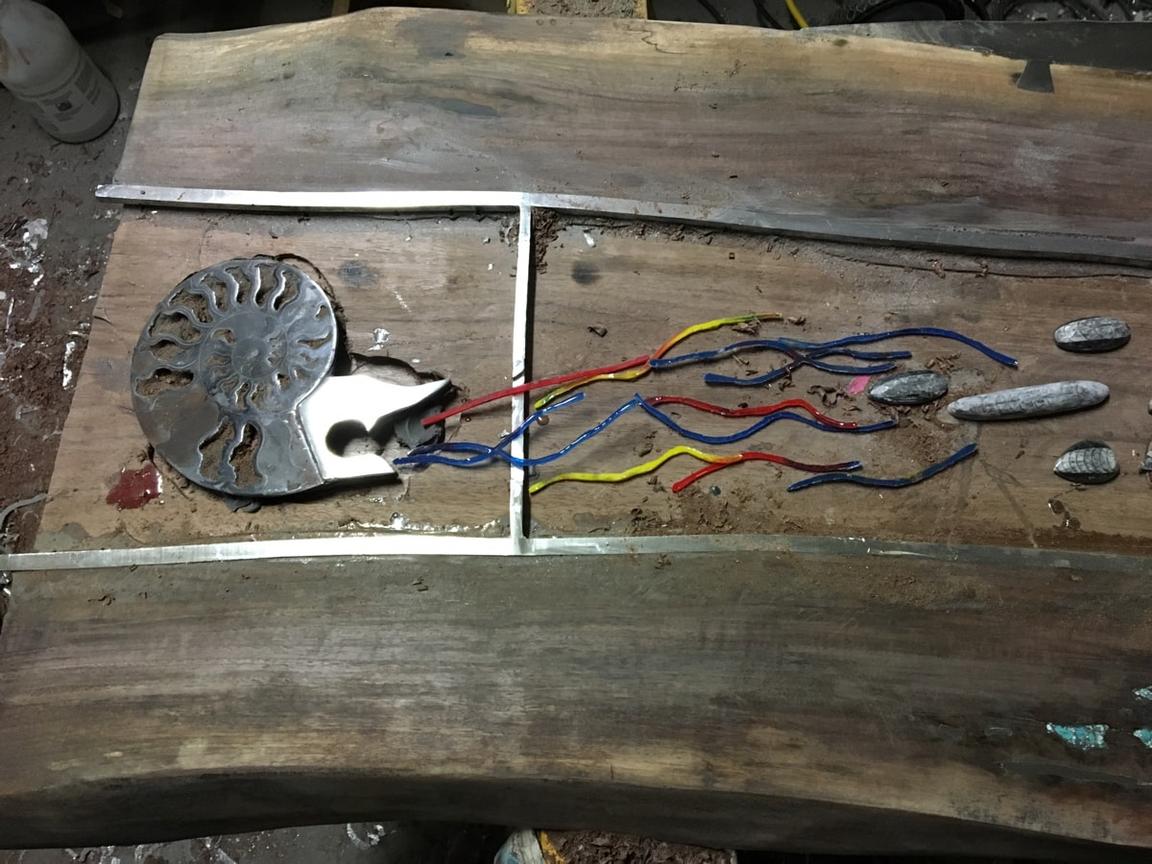
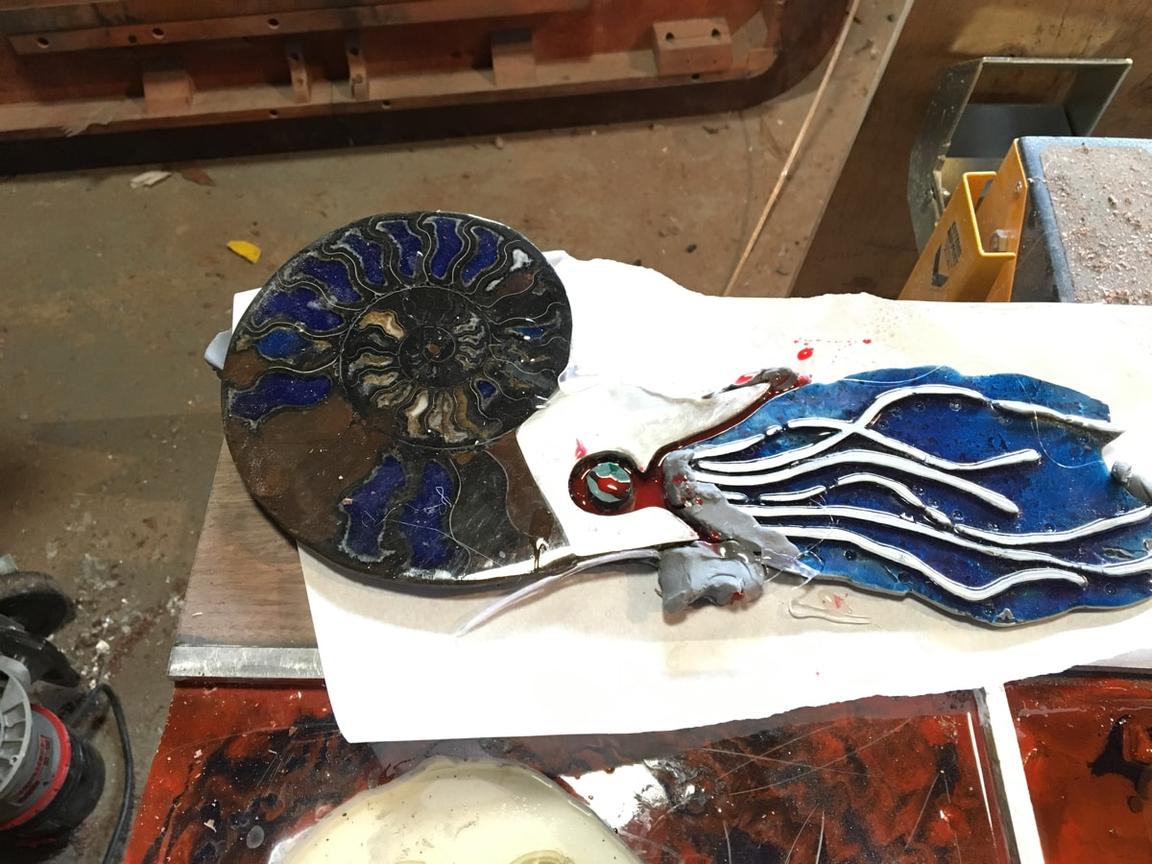
Section 1. Ammonite with tentacles. "Big Bang". This fossil was purchased on Ebay. I imbedded it in blue resin and ground it very thin. The green eye is made of Malachite and the head is hand crafted pewter. The tentacles were first sculpted in wood. with a router, and then used to make a silicone mold that molten pewter was poured into.
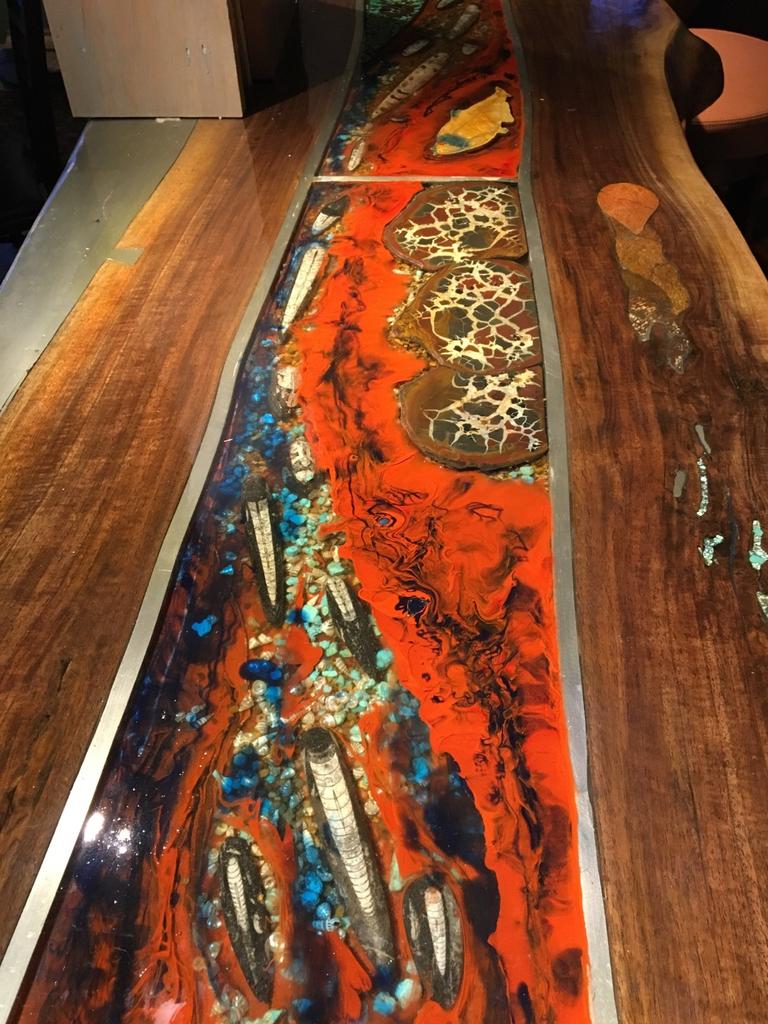
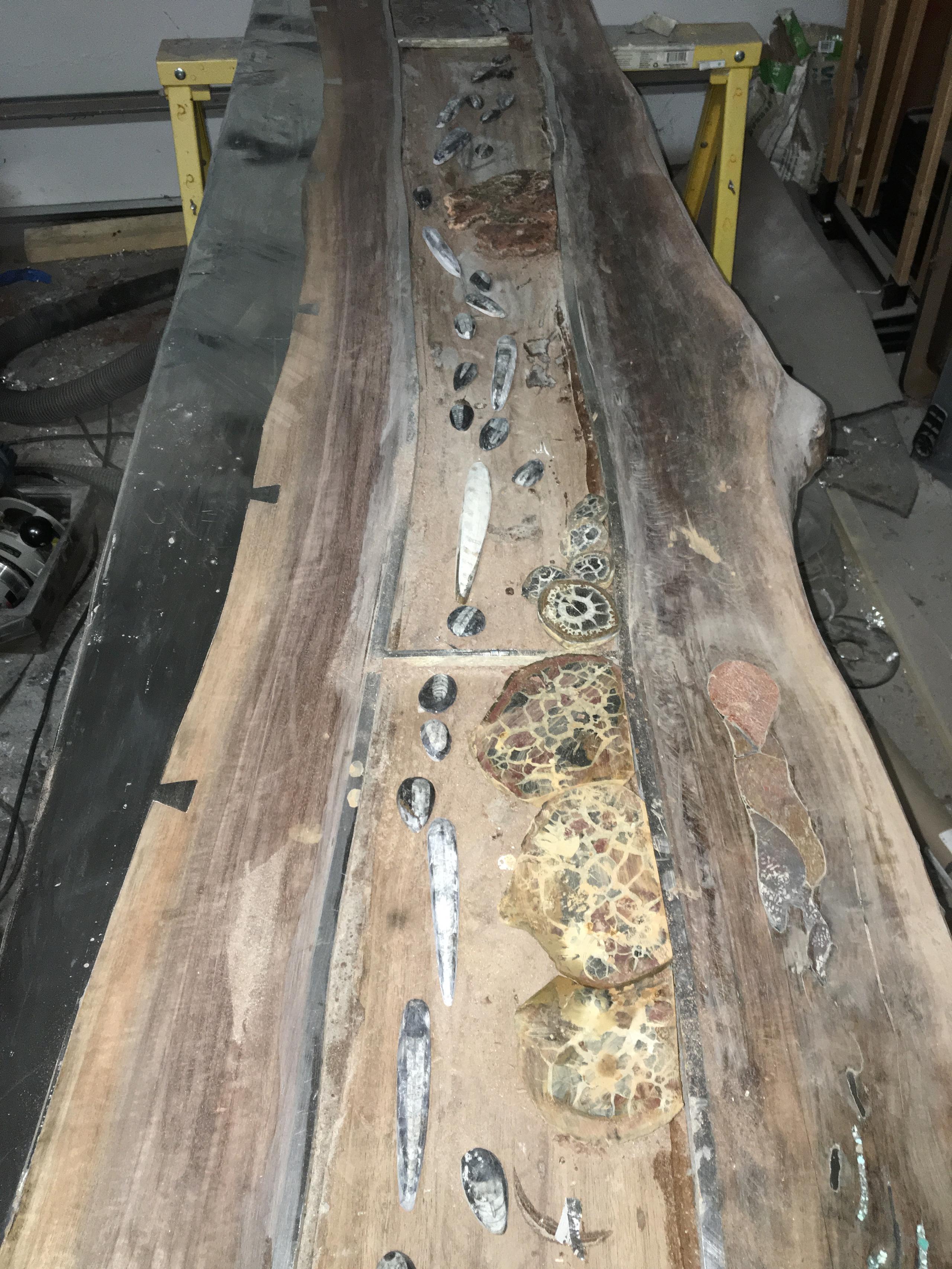
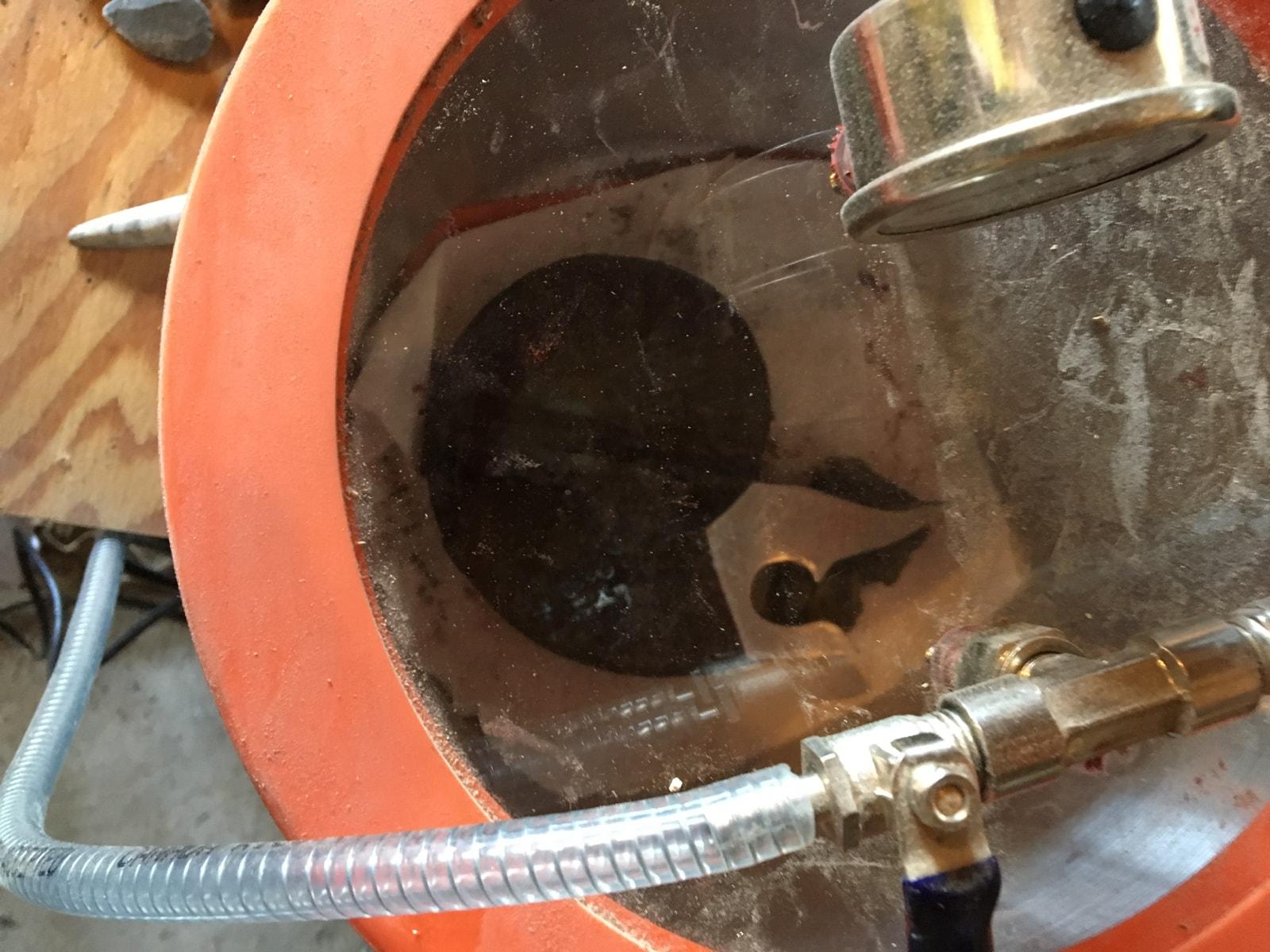
Section 2. Explosive discharge of fire, stone and fossil cascading over Septarian Nodules "dinosaur eggs", 50-70 million yrs old. Each element was placed carefully as multiple layers of epoxy were added. Each batch of epoxy was mixed then placed in a vacuum chamber to pull bubbles out.
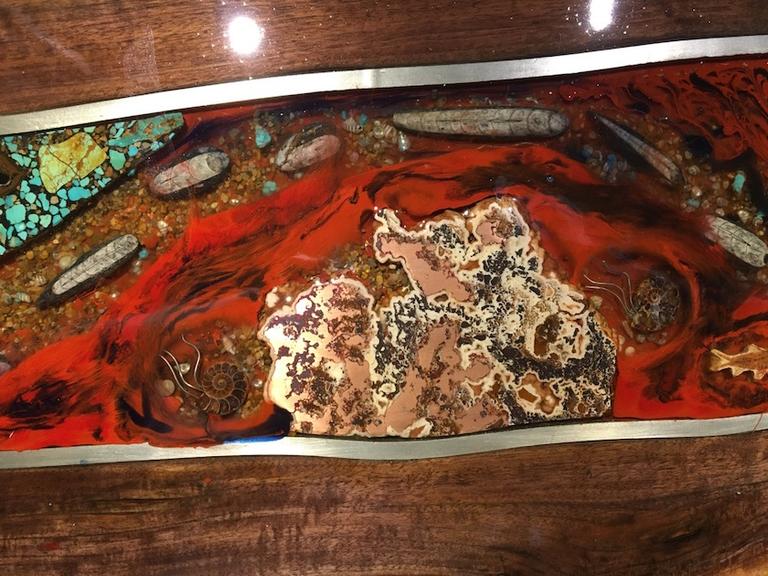
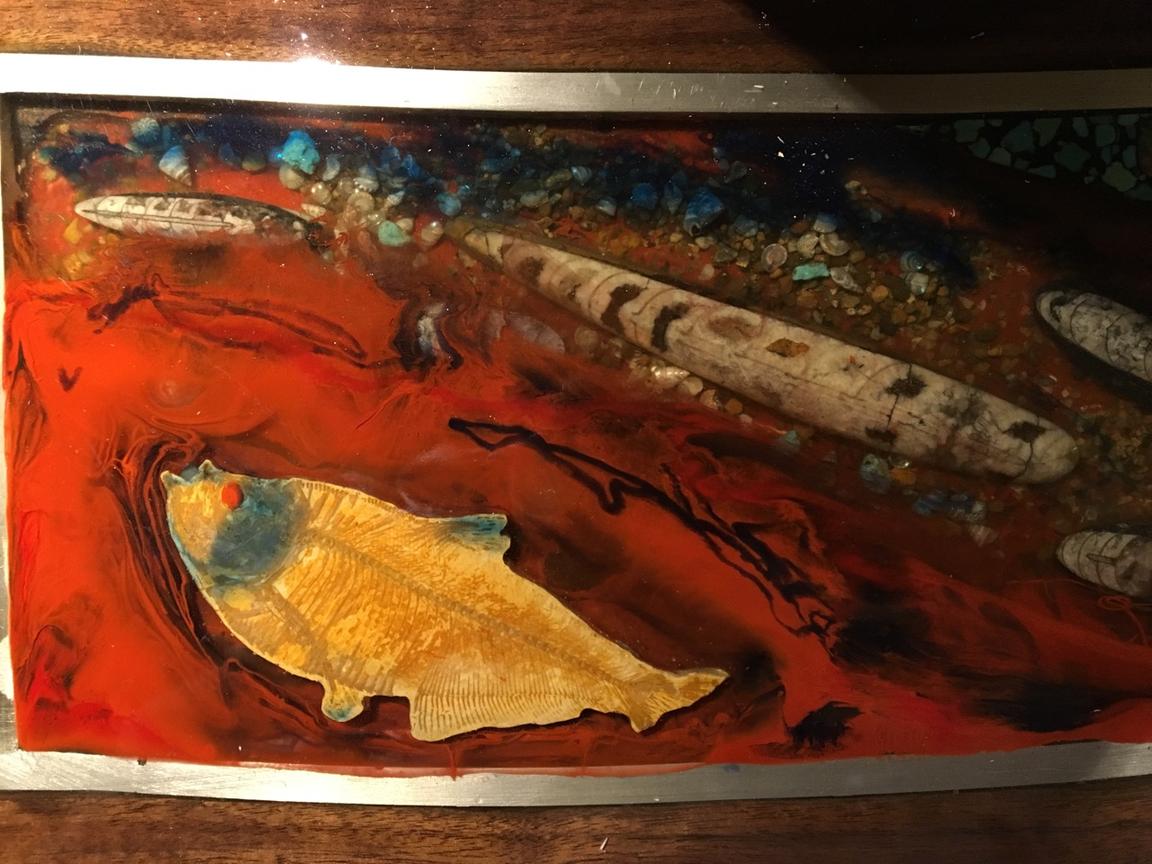
Section 3. Deep Dive - past a Diplomystus (fish), carved from rock and seemingly coming back to life, then under a chilly ice cap made of Kingman mine turquoise before rising over an agate with natural copper. I used a hand grinder to remove excess rock from the fish and then added some "life" with a red eye and blue gills. The tourquoise is set in black epoxy with some other interesting stones.
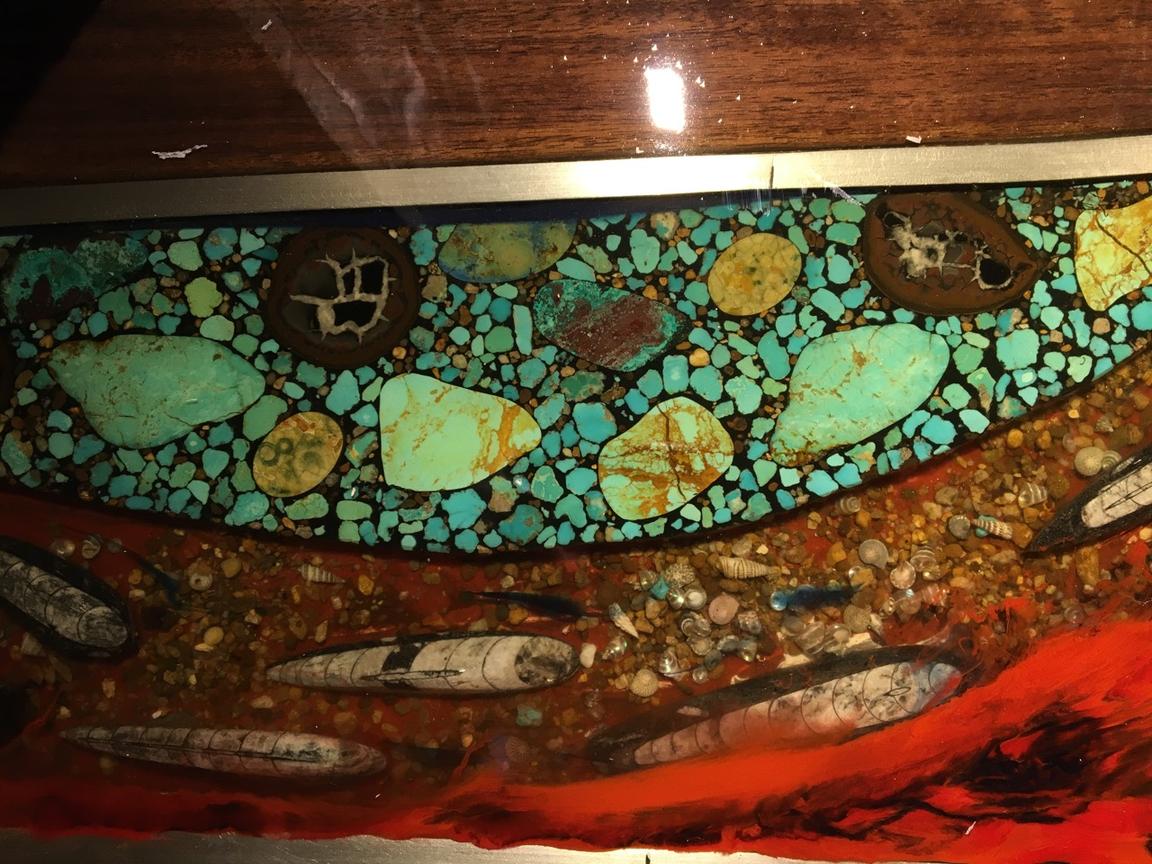
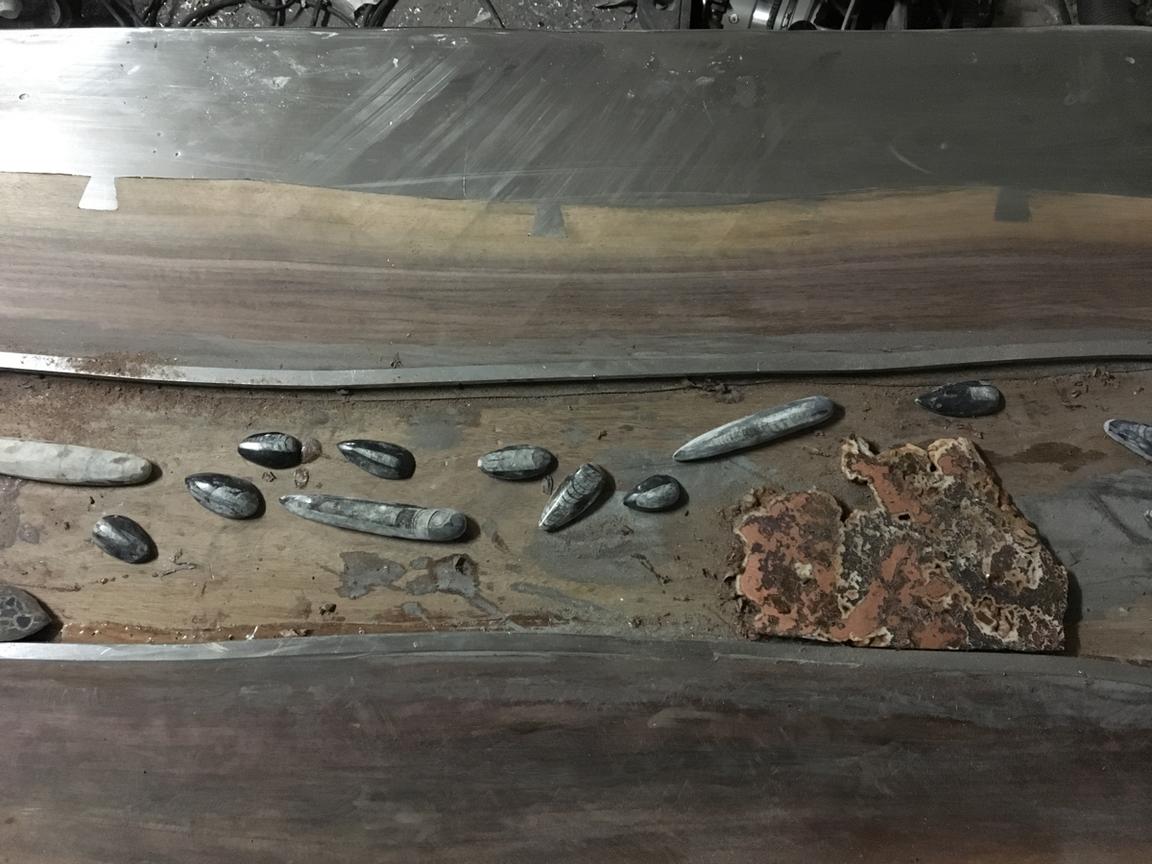
Section 4. Entombed in rock for the next 50 million years before being dug up and becoming part of a bar in Mystic CT. The school of Orthoceras and a large ammonite end their journey and become imbedded Bronze and Turitella rock
3. Pewter edge slab
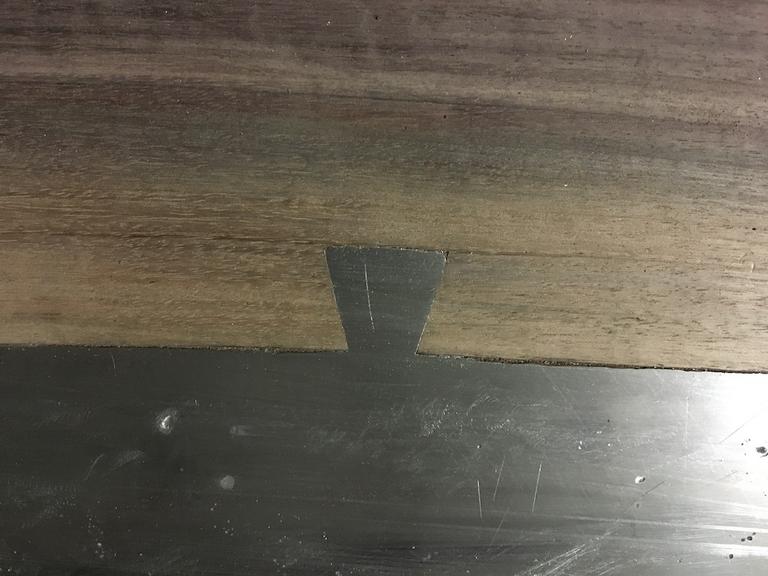
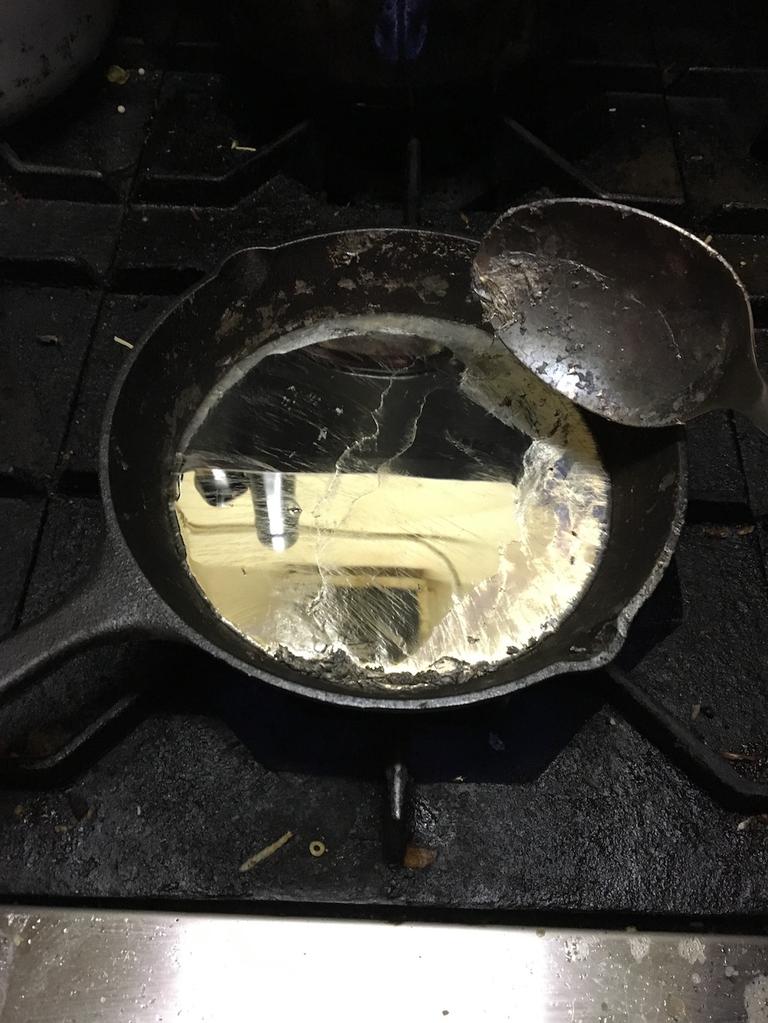
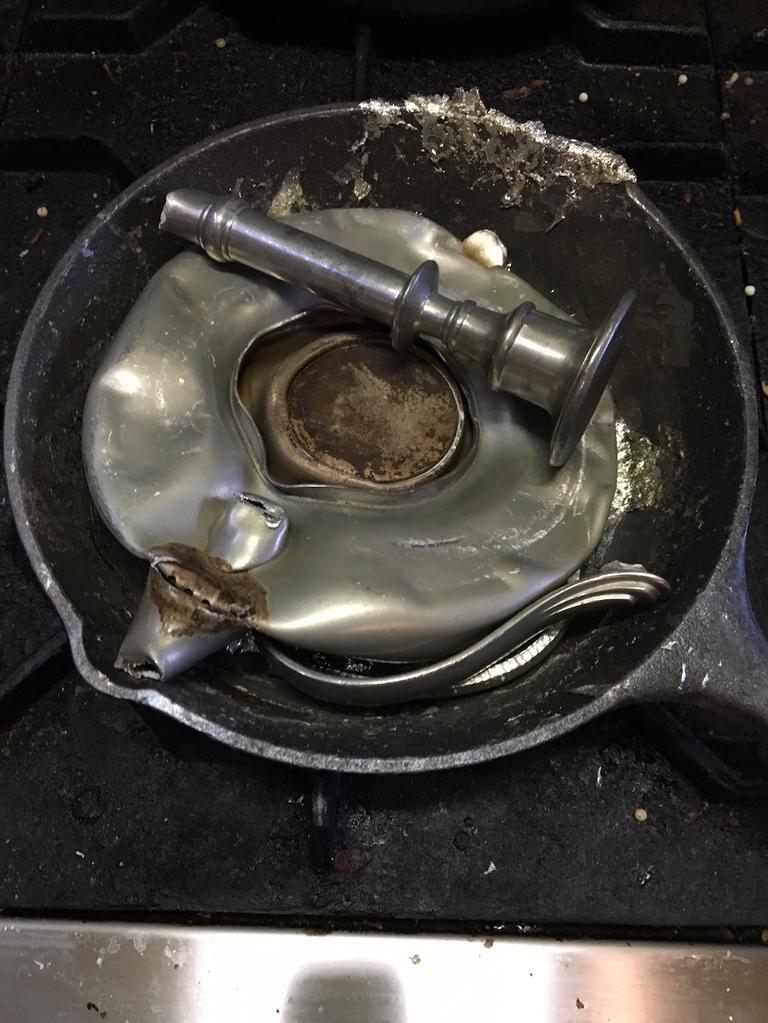
The bar needed to be wider. The solution was to buy a lot of scrap pewter on Ebay, melt it on the stove and pour it into molds. Turn out to be harder than it sounds. The challenge was to make it peacefully blend with the rest of the piece and to avoid burning. The dove tails are deep and functional!
Construction Details
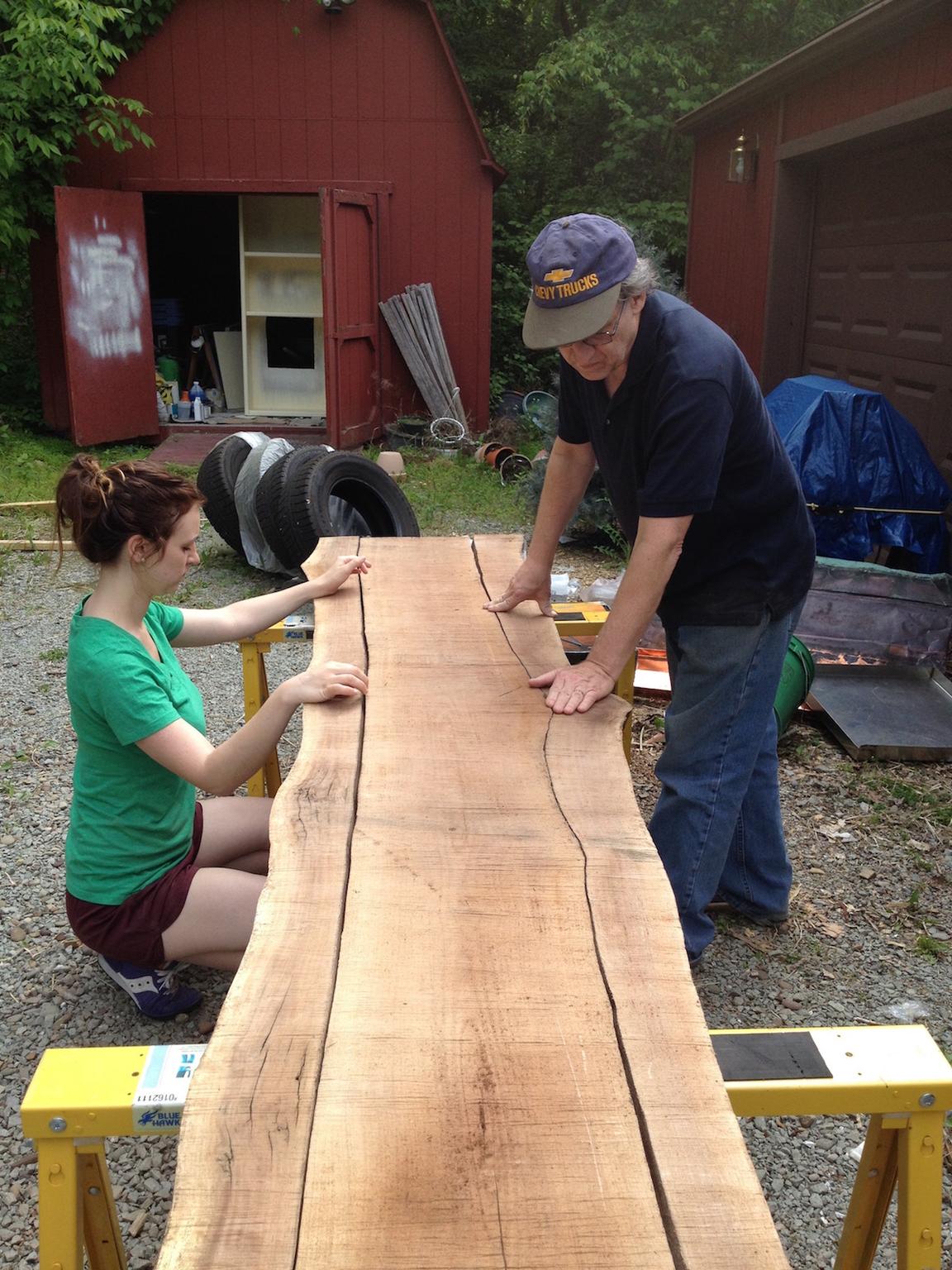
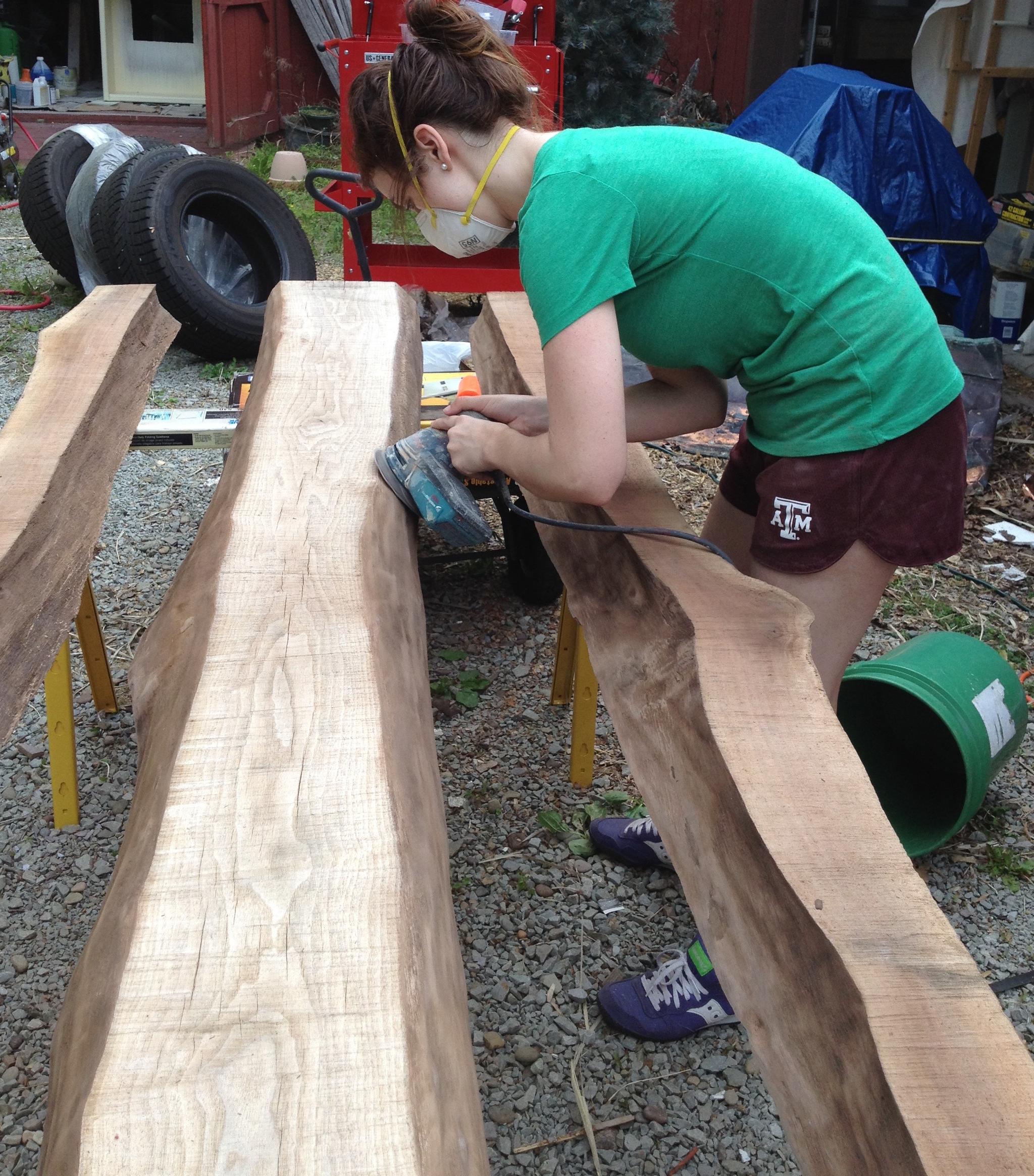
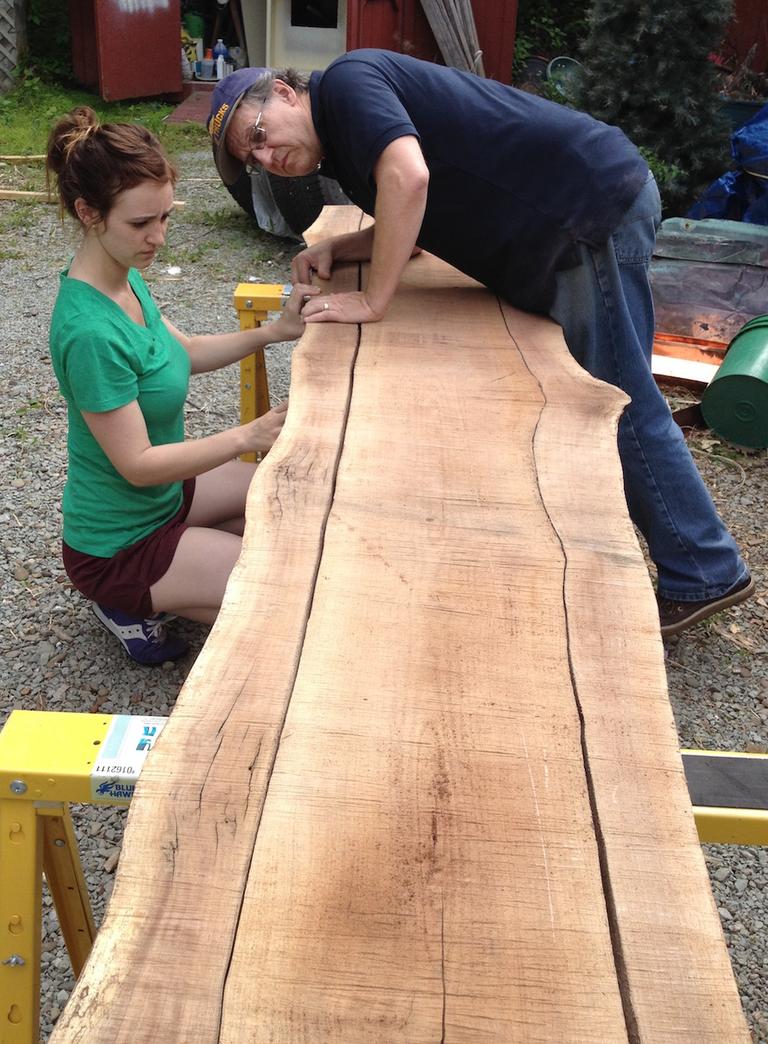
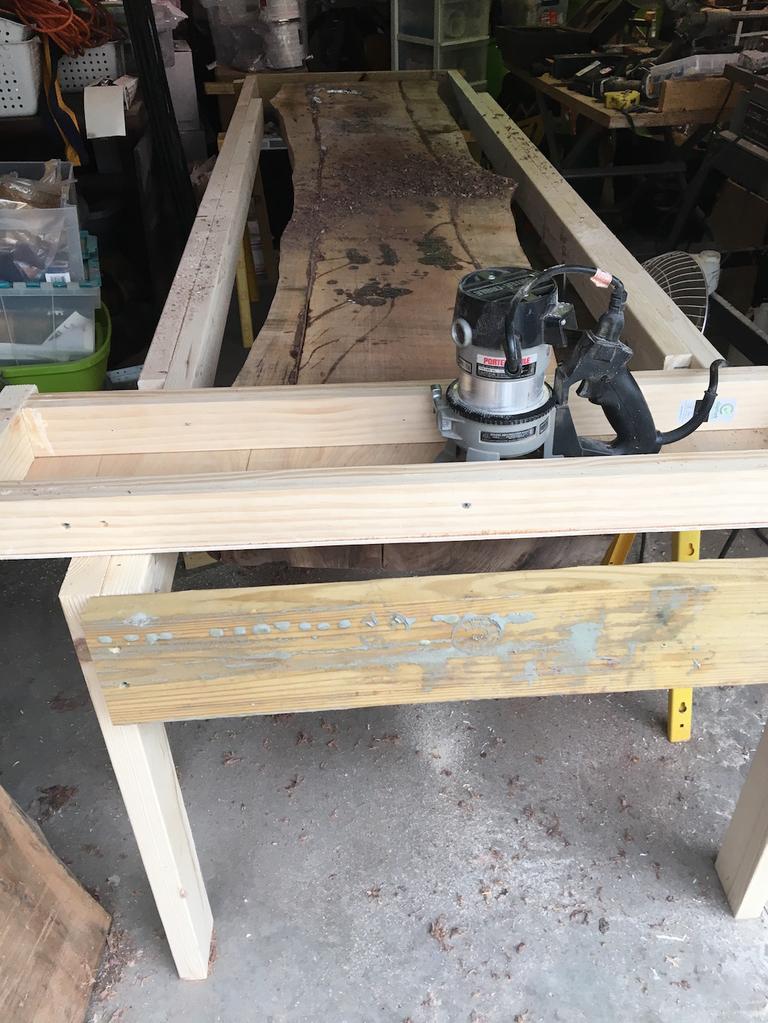
A newly cut 8.5' long, 3" thick walnut slab came from a tree that was toppled by a storm. I bought it for $70 on Craigslist because the heart wood (middle) split from the sap wood, which turned the slab into 3 pieces.The seller thought it was practically worthless; I saw an opportunity for an epic project.
Pewter work
75# of scrap pewter was purchased on Ebay. melted the pewter in a cast iron skillet and poured the edge part to add width. The pewter side piece was joined to slab with dovetails. I poured pewter into silicone molds to make the square stock that divide sections.
Creating a mold for the pewter bull nose edge using high-temp resistant silicone
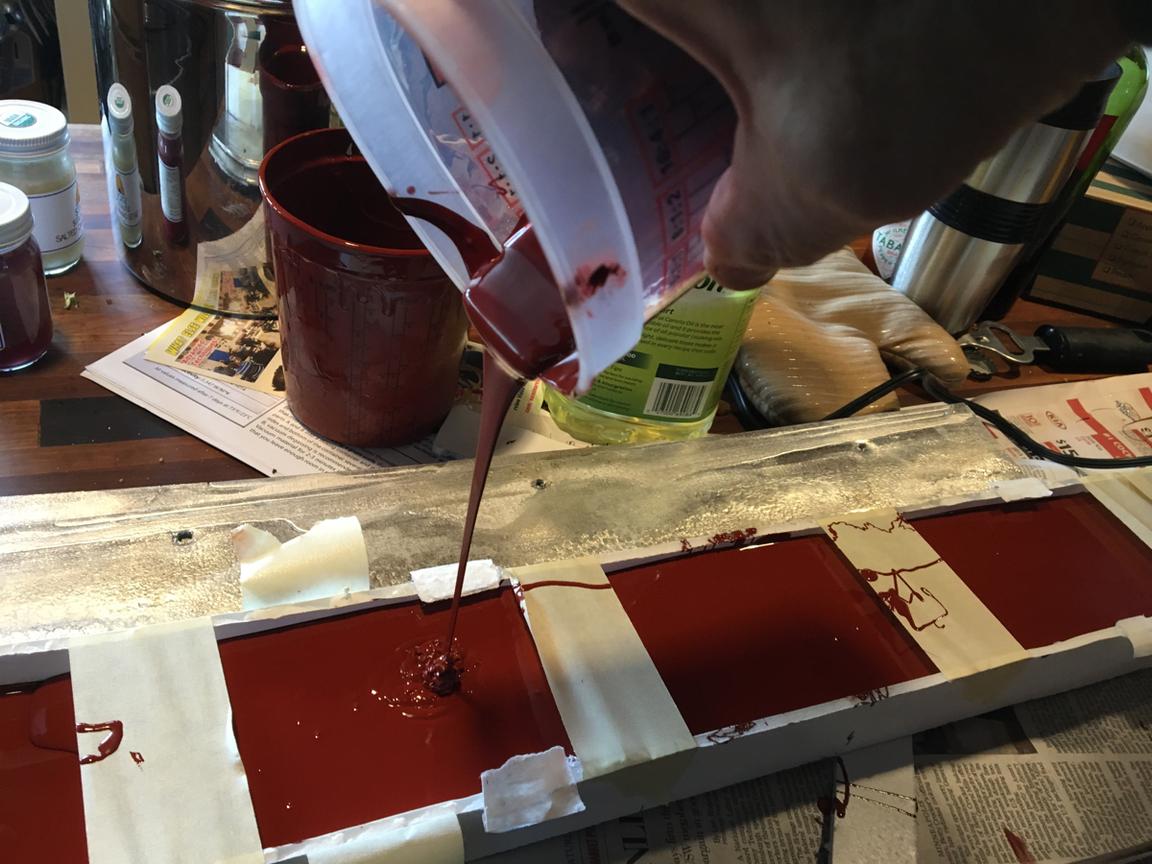
- Pouring Molten Pewter. Had to do this while Glori was out of town since she would have been overly concerned with safety issues and things like burning the floor. This meant I had to pour and video at the same time.
-Opening the mold
Early experiments with design
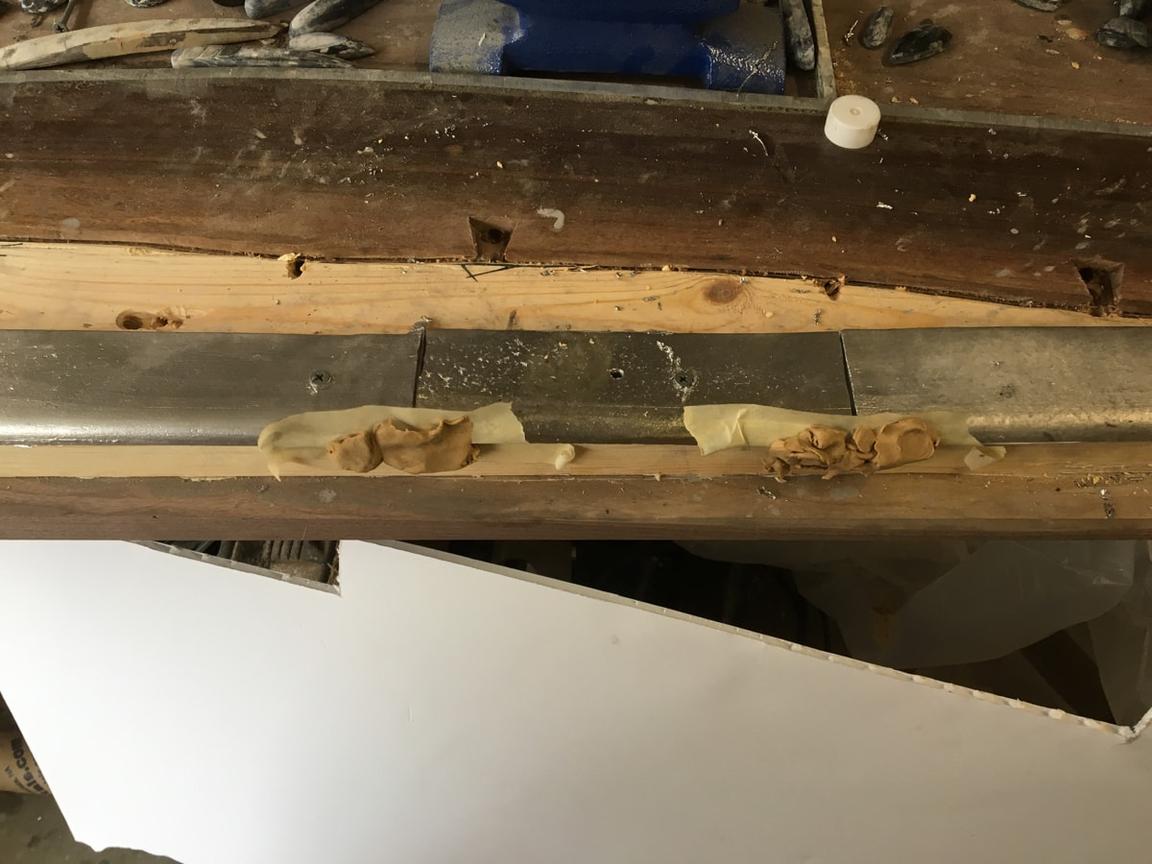
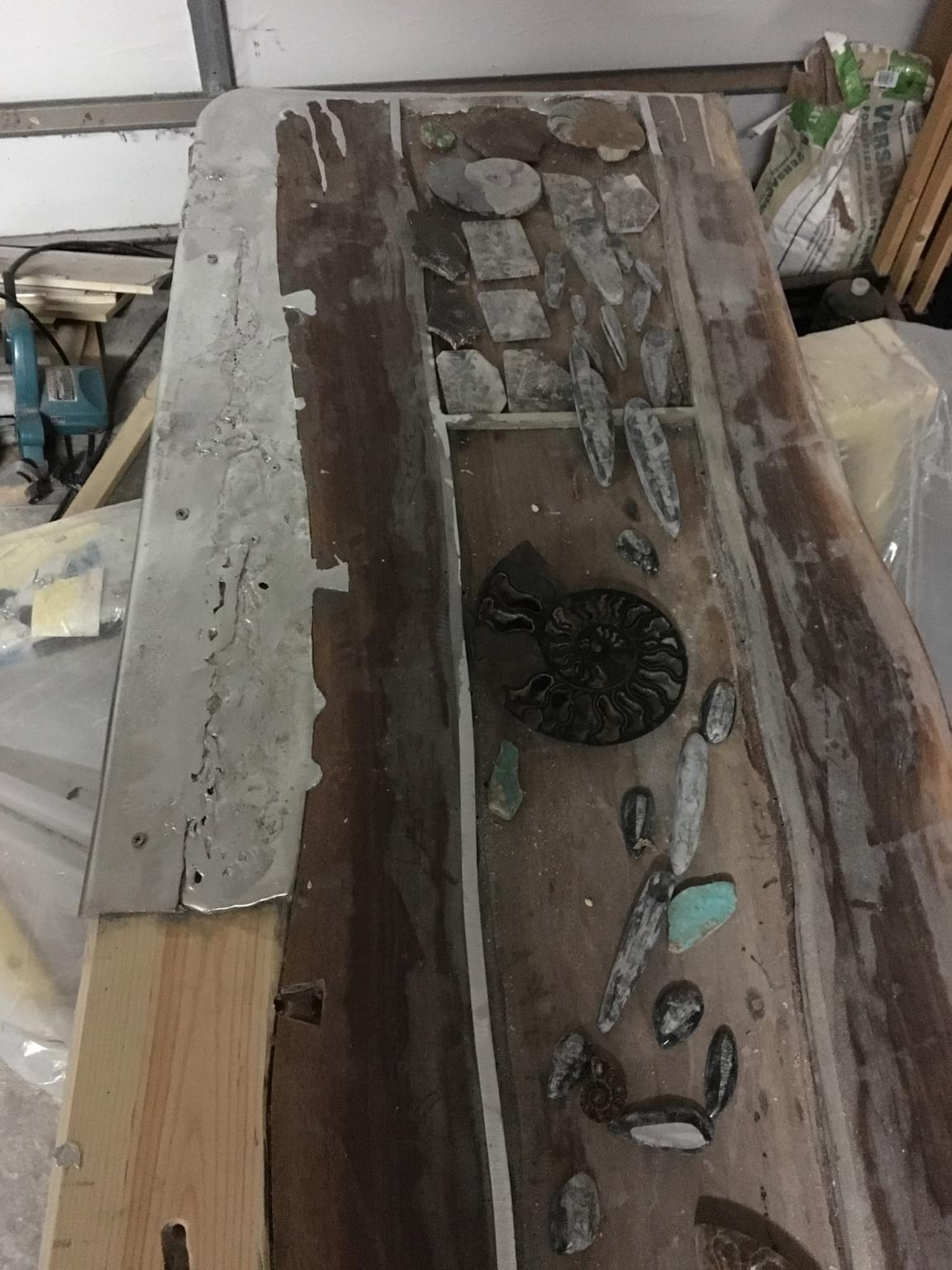
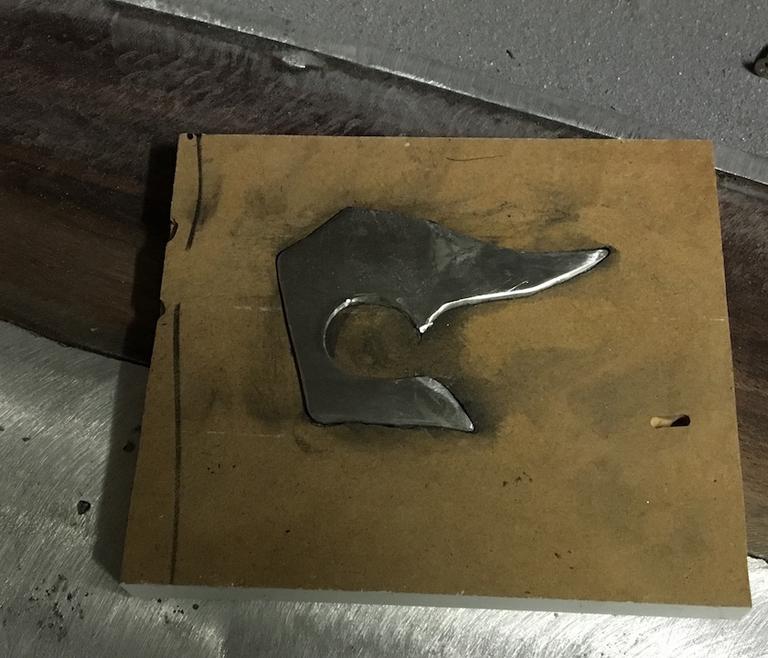
Ammonite Big Bang This took a lot of time. The head and tentacles took a while. The tenticals were going to be made of plastic, but after many attempts with different types of resin, casting at high pressure, vacuum degassing, I decided to just do them in pewter. I transferred the image to mdd and then routed out the individual pieces. These pieces with glued to the bottom of a box and silicone rubber was poured to make a mold
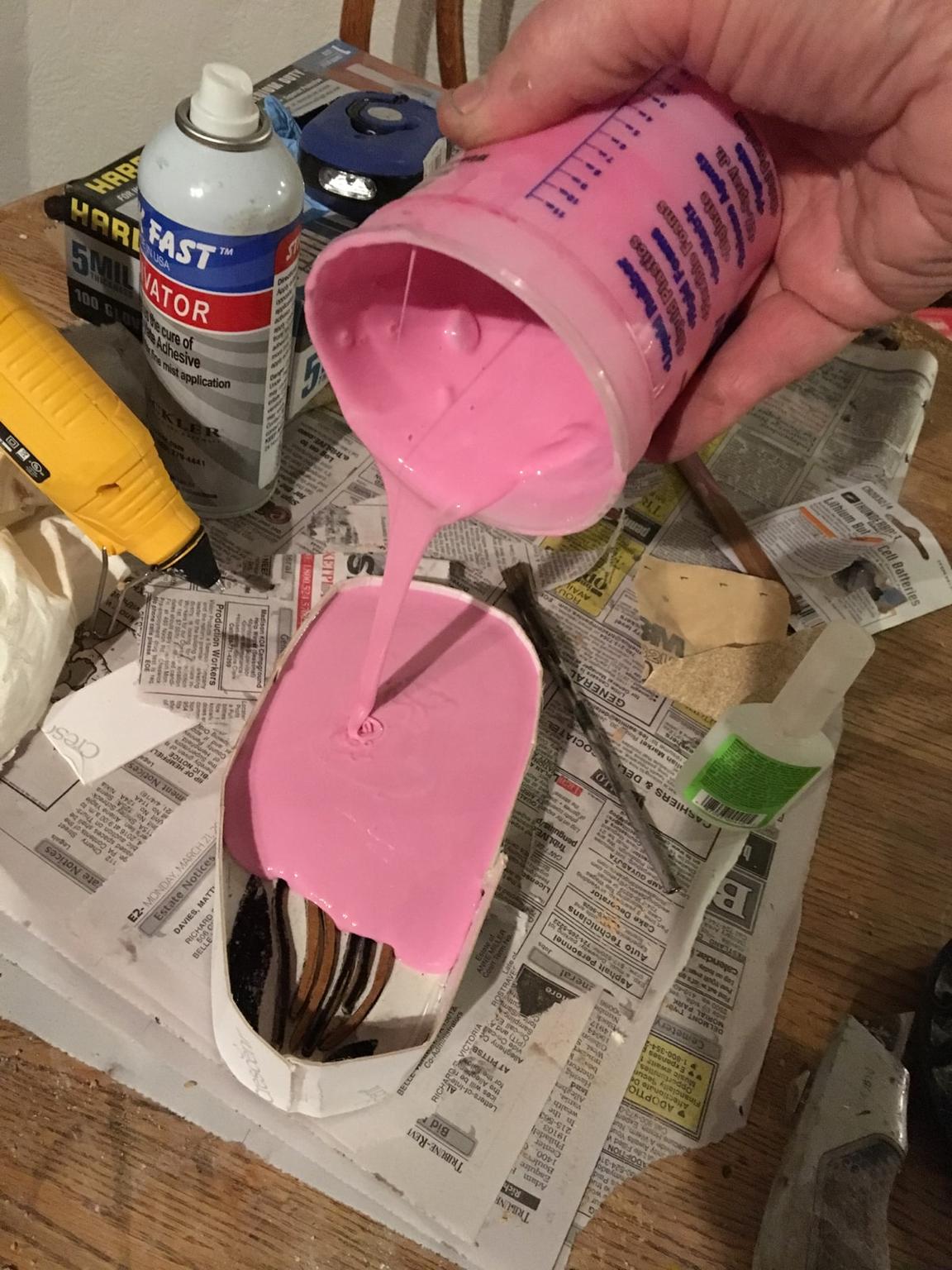
Original idea with plastic tentacles
Ammonite being embedded in resin under full vacuum to remove air bubbles
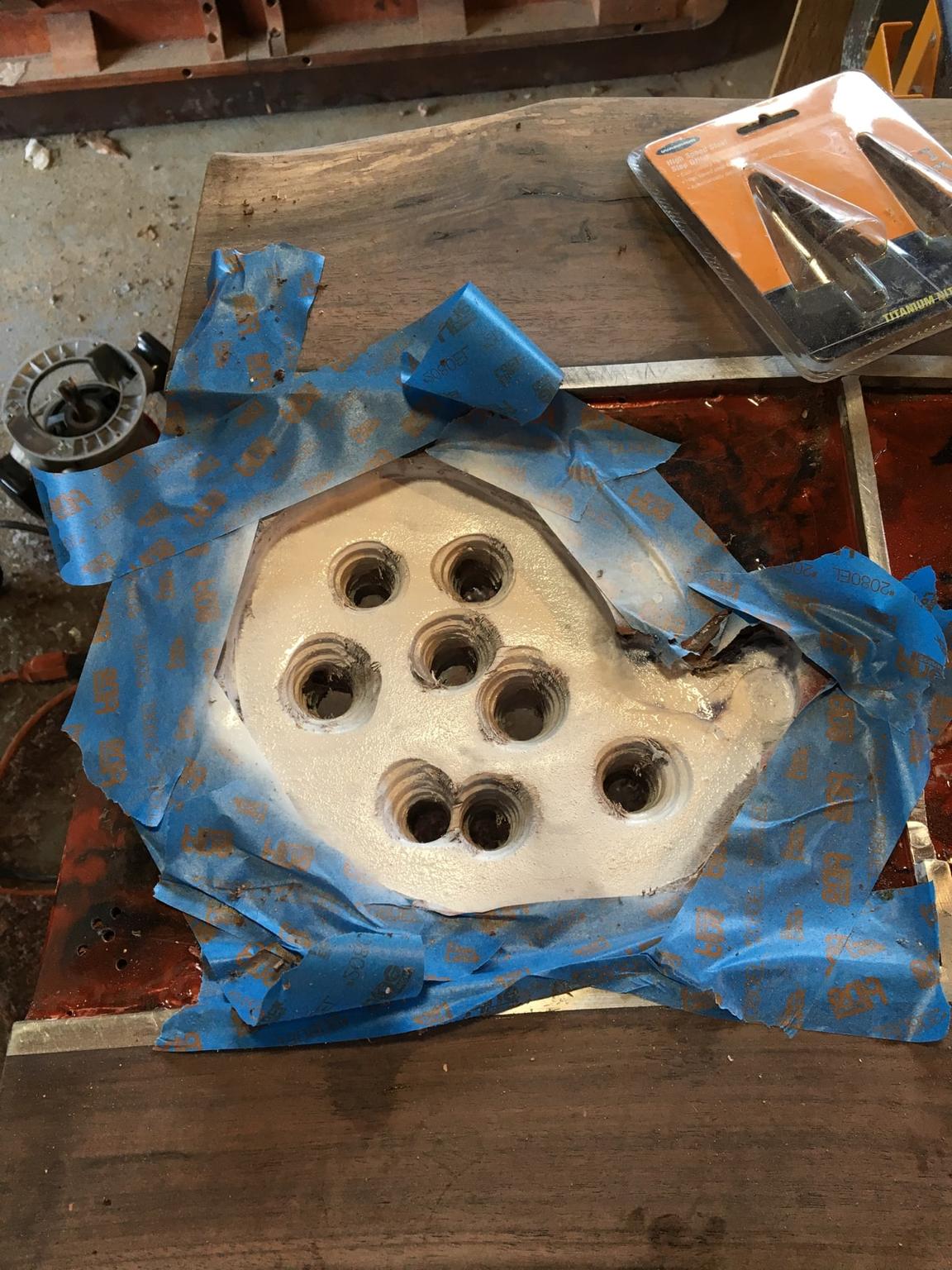
Light holes underneath the ammonite
Come stay with us
Book direct with the owners: no platform fees, and we answer every inquiry ourselves, usually within a day.